Window Treatments for Bathrooms and Kitchens: What Actually Holds Up Near Moisture
Bathrooms and kitchens ask more of a window treatment than any other room in the house. Steam, splashes, sudden temperature swings, and the occasional grease-laden air all take their toll on fabric, wood, and hardware. The right covering doesn't just look good here — it has to perform.
If you've ever watched a wood blind warp near a kitchen sink or a Roman shade develop water spots above a bathtub, you already know: not every treatment belongs in every room.
What to Avoid Near Moisture
Real wood blinds are a classic choice for living rooms and offices, but humidity is their weak point. Wood absorbs moisture, which leads to warping, cracking, and discoloration over time — especially in bathrooms with limited ventilation.
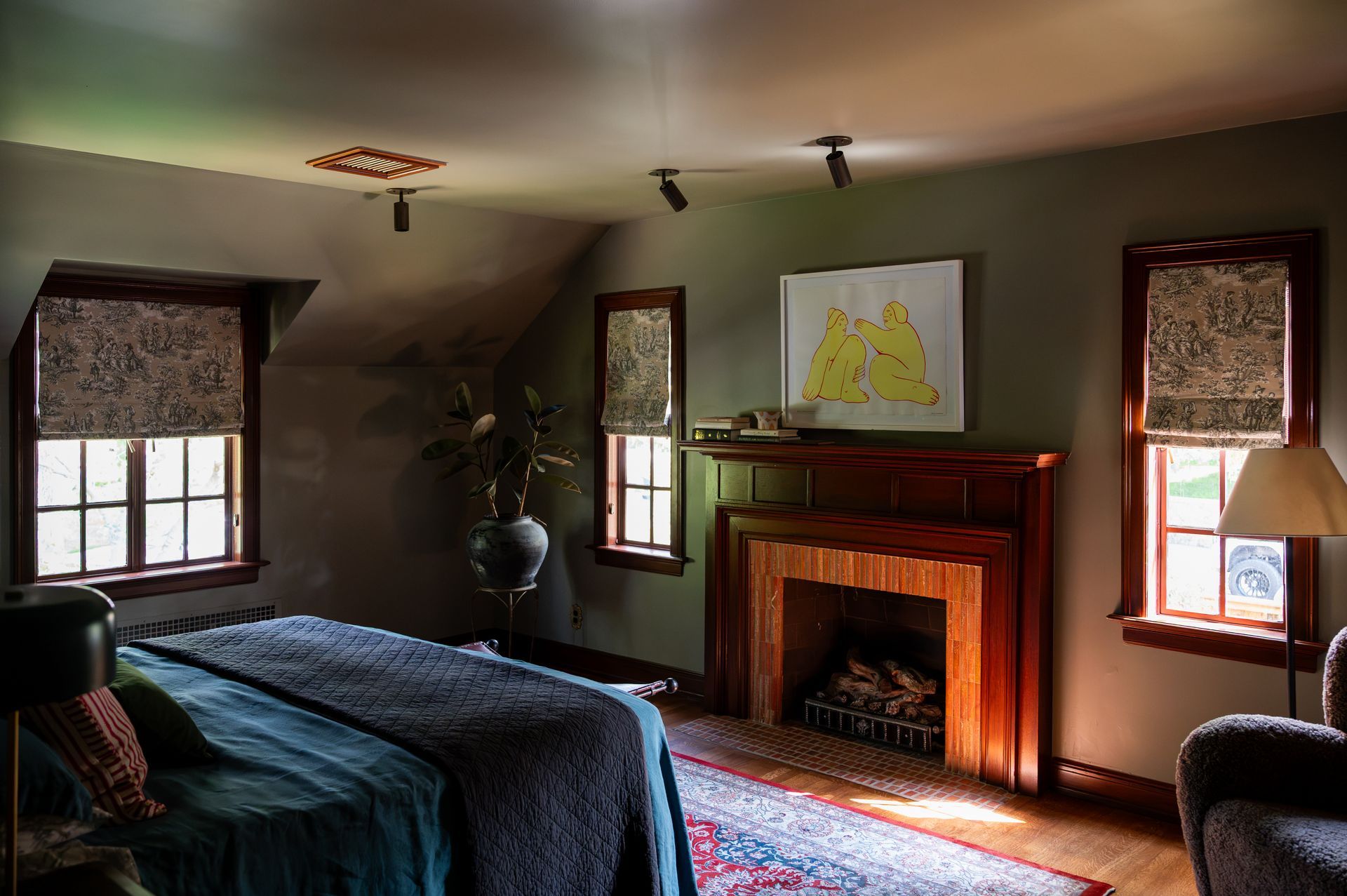
Unlined fabric drapery near a kitchen sink or bathroom shower can trap moisture and develop mildew, and fabric near a stove is also vulnerable to absorbing cooking odors and grease.
What Works Instead
- Faux wood blinds.
- These mimic the look of real wood but are made from composite materials engineered to resist warping, fading, and moisture damage — making them one of the most practical choices for kitchens and bathrooms alike.
- Cellular and roller shades in moisture-resistant fabrics.
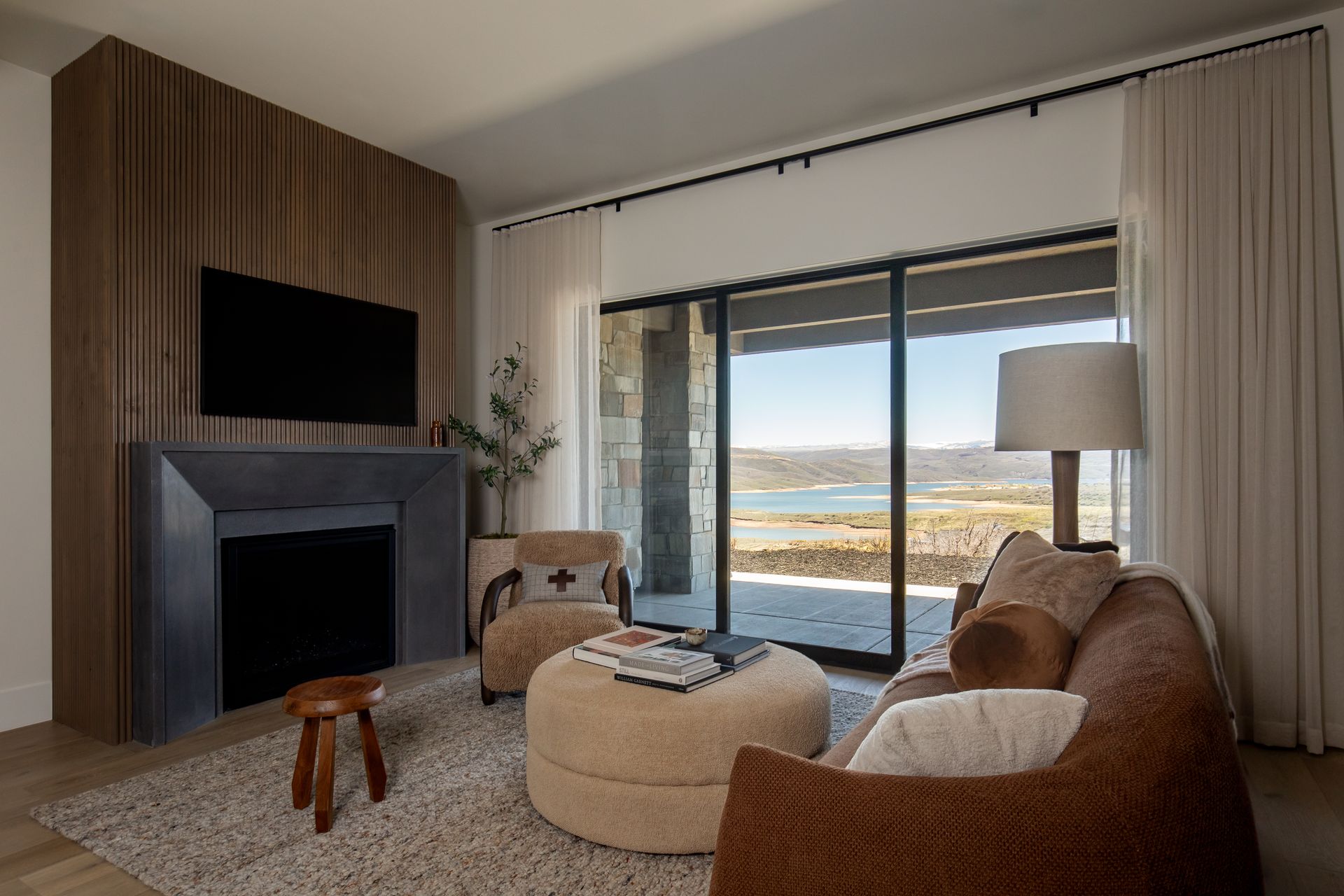
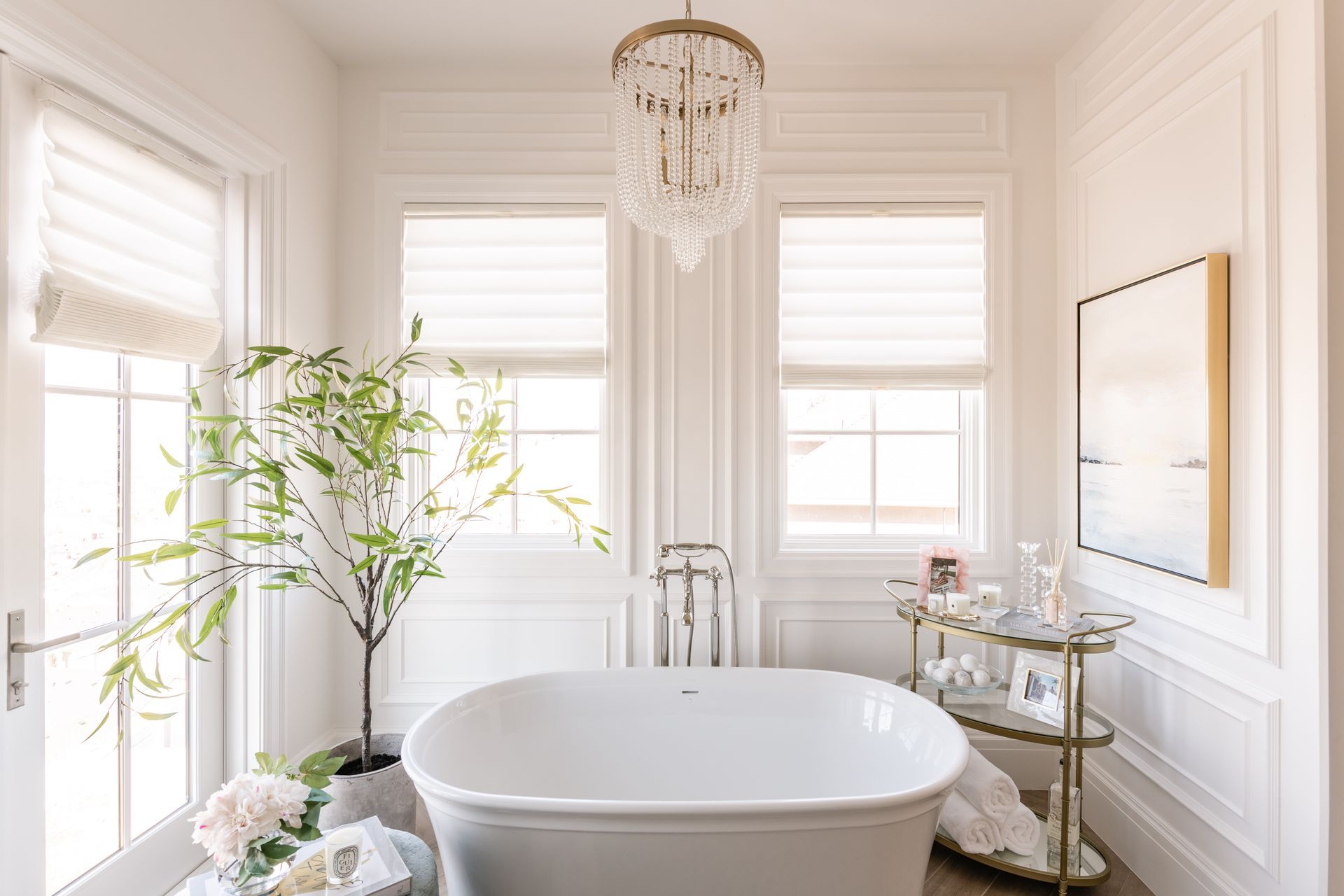
- Many performance fabrics today are designed specifically for high-humidity environments. Paired with a clean, tailored profile, these shades offer privacy and light control without the upkeep concerns of natural materials.
- Vinyl or aluminum shutters.
- For bathrooms especially, these hold their shape and finish even with daily steam exposure, and they wipe clean easily.
- Motorized options for hard-to-reach windows.
- Kitchen windows above sinks and bathroom windows over tubs are notoriously awkward to operate by hand. Lutron and Hunter Douglas motorized shades solve this — raise or lower with a tap, no reaching across wet counters or slippery tile.
Design Considerations Beyond Durability
Privacy without losing light. Bathrooms in particular benefit from treatments that filter light while maintaining privacy — frosted-look cellular shades or top-down/bottom-up configurations let light in from above while keeping the lower portion of the window covered.
Color and finish. Kitchens see a lot of activity and mess, so lighter, easy-to-clean finishes in faux wood or vinyl tend to age better visually than fabric in busy color palettes.
Ventilation matters too. Treatments that allow airflow — like shutters with adjustable louvers — help reduce condensation buildup on windows altogether, which extends the life of the treatment itself.
The Bottom Line
Bathrooms and kitchens aren't the place to repurpose treatments from another room. Choosing materials engineered for moisture and heat from the start means fewer replacements, less maintenance, and window coverings that still look intentional five years from now.
If you're planning treatments for these spaces — whether in Park City or St. George — our design team can walk through your specific layout, light exposure, and finish options.
Your home deserves to be perfectly covered.