How to Choose Window Treatments for Every Room in Your Home
Most people approach window treatments the same way in every room — pick something that looks good and call it done. The problem with that approach is that no two rooms in your home have the same needs. The light is different. The function is different. The way you live in the space is different.
A bedroom needs darkness at 7am on a Saturday. A kitchen needs something practical that survives steam and splatter. A living room needs to handle afternoon glare without making the space feel like a cave. A home office needs to eliminate screen glare without losing the view.
Get the treatment wrong and you'll notice it every single day — squinting at your screen, waking up too early, or living in a room that never quite feels finished. Get it right and you stop thinking about your windows entirely, which is exactly the point.
Here's how to choose window treatments for every room in your home — starting with what that room actually needs.
Primary Bedroom: Darkness, Privacy, and a Little Luxury
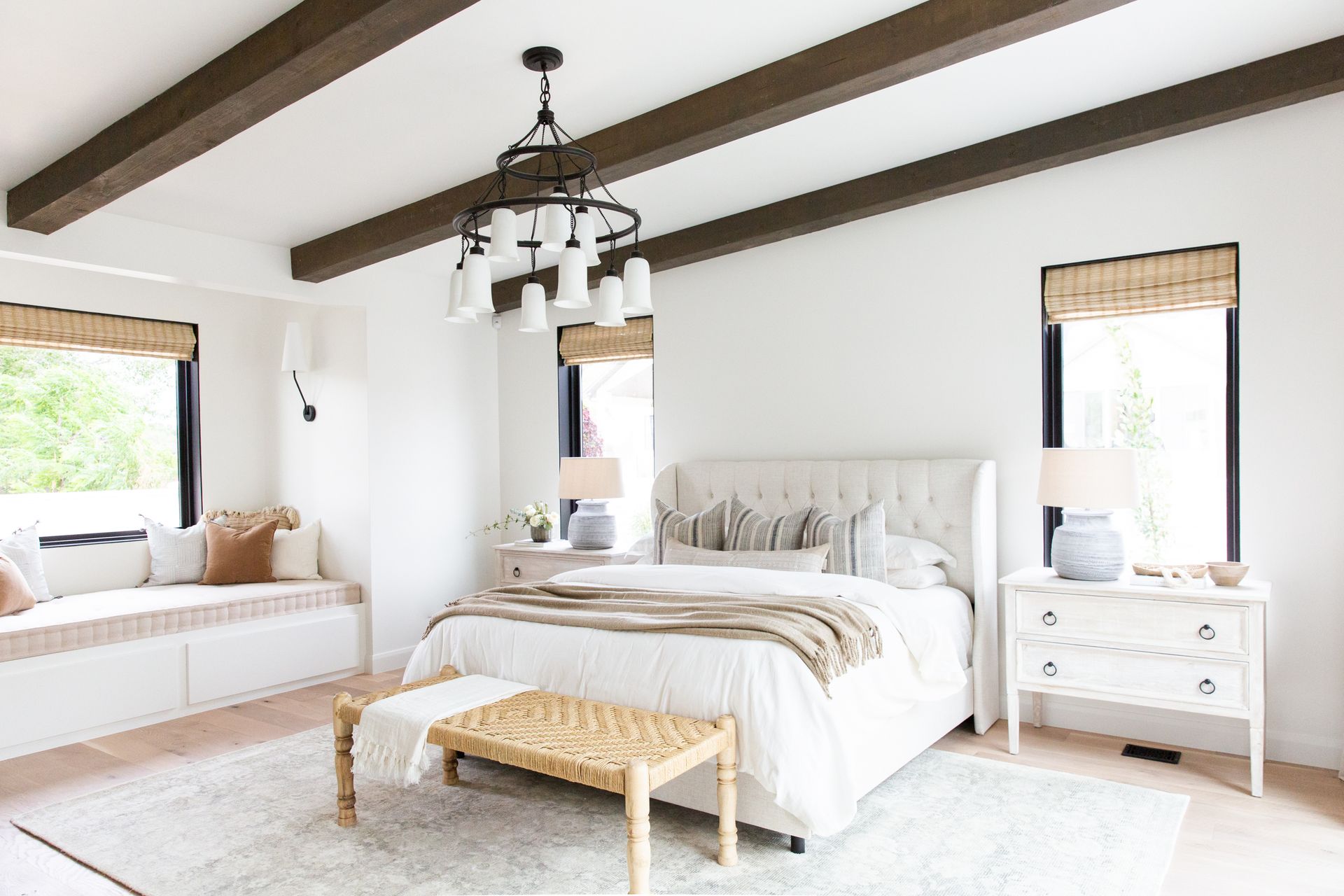
The primary bedroom has one non-negotiable requirement: light control. Specifically, the ability to make the room genuinely dark when you want to sleep and beautifully lit when you don't.
The mistake most people make is choosing light-filtering shades in the bedroom because they look softer. Light-filtering fabric does exactly what the name says — it filters, not blocks. On a bright Utah morning, that means your room will still be lit at 6am regardless of whether your shades are down.
What actually works:
A blackout roller shade or blackout cellular shade as your primary light control layer. This is the workhorse — fully opaque, completely dark when closed, clean and minimal when open.
Layered over that, a set of drapery panels in a soft linen or textured fabric. The panels add warmth, softness, and a finished look. When the blackout shade is up and the panels are open, the room feels open and airy. When both are closed, it's genuinely dark.
This combination — blackout shade plus drapery — is the most functional and design-forward solution for a primary bedroom, and it's what you'll see in every well-designed bedroom in Park City's luxury market.
Motorization consideration: A motorized blackout shade on a schedule means your room gradually lightens when you want to wake up and darkens automatically at night. For a primary bedroom, this is one of the highest-value motorization applications in the home.
Living Room: Light Control Without Losing the View
The living room is where window treatment decisions have the most visual impact — and where the most mistakes get made. It's tempting to go sheer and light because living rooms feel better bright. But in a Utah home with significant south or west-facing exposure, an unshaded living room in the afternoon is hot, glary, and uncomfortable.
The goal is to manage the sun without closing off the room. That requires thinking about light in layers.
What actually works:
A solar screen roller shade as your primary layer. Solar screens come in different openness factors — typically 1%, 3%, 5%, and 10%. A 3% solar screen on a south-facing living room window will cut glare and heat gain significantly while still preserving a clear view to the outside. You'd be surprised how little it affects the feel of the room while eliminating the problems.
Pair that with drapery panels on either side of the window — not covering the glass, just framing it. Floor-to-ceiling panels hung above the window frame and extending beyond it on both sides make ceilings feel taller, windows feel larger, and the room feel finished in a way that nothing else does.
What to avoid: Horizontal blinds in a living room. They control light adequately but they read as functional rather than intentional, and in a high-visibility room that matters.
For St. George homes: West-facing living rooms in St. George take brutal afternoon sun from June through September. A solar screen with a 1% or 3% openness factor on those windows is one of the highest-ROI window treatment decisions you can make — both for comfort and for your air conditioning bill.
Kitchen: Practical First, Beautiful Second
The kitchen is the room where window treatments fail most often — not because people choose ugly options, but because they choose the wrong material for the environment. Fabric near a stovetop absorbs grease and steam. Anything difficult to wipe clean will look tired within a year.
The kitchen also typically has smaller windows over a sink or counter — which means privacy matters more than dramatic light control.
What actually works:
Faux wood blinds are the most practical kitchen window treatment available. They're moisture-resistant, easy to wipe clean, and available in finishes that look convincingly like real wood. The slat mechanism gives you precise control over light direction — angle them up to bounce light off the ceiling, down for privacy, or close them fully.
Roman shades in a performance fabric are a strong alternative if you want something softer. Look for fabrics that are stain-treated or moisture-resistant. A flat Roman shade in a clean stripe or solid neutral reads as intentional and elevated without being precious about the kitchen environment.
What to avoid: Long drapery panels near cooking areas — both a practical hazard and a maintenance problem. Sheer curtains that go limp and stain easily.
Home Office: Eliminate Glare, Keep the Light
A home office has a specific and underappreciated problem — screen glare. Most people deal with this by closing their blinds completely and turning on overhead lights, which is exactly the wrong solution. A dark office with artificial light is fatiguing in a way that a naturally lit room never is.
The goal is to keep natural light while eliminating the direct glare that makes screens impossible to see.
What actually works:
A light-filtering roller shade or solar screen shade is the single best solution for a home office window. A solar screen with a 5% or 10% openness factor lets in plenty of diffused natural light, eliminates direct glare, and keeps the room feeling open and connected to the outside.
Position matters too. If your monitor faces a window, even a light-filtering shade may not fully eliminate screen reflection. In that case, a 3% solar screen is the better choice — it reduces the overall brightness of the light source enough to eliminate the reflection problem.
Motorization consideration: For a home office, a motorized shade you can adjust without leaving your desk is genuinely useful. As the sun moves throughout the day, you can raise or lower the shade instantly without breaking your focus.
Dining Room: Where Design Takes Center Stage
The dining room is the most design-forward room in most homes — and the window treatment should reflect that. Unlike the bedroom or home office, light control is rarely the primary concern. You want something that makes the room feel special.
What actually works:
Roman shades in a statement fabric — a textured linen, a subtle pattern, or a rich solid — are the ideal dining room treatment. When raised, they stack neatly and let in full light. When lowered, they add color, texture, and warmth to the space without the weight of full drapery.
Full-length drapery panels work beautifully in larger dining rooms, particularly those with tall ceilings. Floor-to-ceiling panels in a rich fabric — a velvet, a heavy linen, or a wool blend — give a dining room a sense of occasion that other treatments can't match.
What to avoid: Horizontal blinds in the dining room. The slat mechanism reads as utilitarian in a space that should feel considered and warm.
Bathroom: Privacy Without Darkness
The bathroom has a specific tension — you need privacy, but you don't want to lose natural light entirely. A dark bathroom feels smaller and less pleasant than it should. The right treatment solves both problems at once.
What actually works:
A top-down/bottom-up cellular shade is the most practical and versatile bathroom window treatment. The bottom panel provides privacy at eye level while the top of the window remains open, letting in natural light from above. This is especially useful for bathroom windows that face a neighboring property.
Shutters are the most durable bathroom option and work particularly well in bathrooms with architectural character. They're easy to clean, moisture-resistant in most configurations, and provide full privacy control with a finished, built-in look.
What to avoid: Fabric-based treatments without moisture resistance in bathrooms with showers or soaking tubs — steam will damage them over time.
Children's Rooms and Nurseries: Darkness is Non-Negotiable
If you have young children, you already know this problem. A child's room that isn't genuinely dark at nap time and bedtime means a child who doesn't sleep — which means a parent who doesn't sleep.
What actually works:
A true blackout cellular shade or blackout roller shade — not light-filtering, not room-darkening, but genuine blackout fabric with side channels that prevent light from leaking around the edges. This is one area where getting the right product matters more than in any other room in the house.
Look for treatments with side tracks or channels that seal the edges of the shade against the window frame. Even with blackout fabric, light leak around the sides can be enough to wake a sleeping child.
Motorization consideration: A motorized blackout shade in a nursery or child's room that operates quietly is genuinely life-changing for parents. Being able to lower a shade with your phone while holding a sleeping baby is the kind of small thing that matters enormously at 3am.
Choosing Window Treatments in Utah: What's Different Here
Window treatment decisions in Utah aren't the same as they are anywhere else in the country — and product choice should reflect that.
In Park City, elevation is the factor most people don't think about. At 7,000 feet, UV radiation is approximately 25% more intense than at sea level. UV is the primary cause of faded floors, bleached upholstery, and damaged artwork. Even rooms that don't feel particularly sunny are absorbing significant UV throughout the day. Light-filtering fabrics that block UV — even sheers — make a real difference in protecting your home's finishes over time.
Park City winters also mean cold glass. A drafty window on a January night loses heat faster than any other surface in the room. Cellular shades and lined drapery panels both add meaningful insulation and make cold rooms more comfortable without touching the thermostat.
In St. George, heat is the dominant concern. Summer temperatures regularly exceed 105°F and the sun is relentless from late spring through early fall. West-facing rooms in a St. George home take the hardest afternoon hit — and without proper solar control, those rooms become genuinely uncomfortable and drive air conditioning costs significantly higher.
Solar screen roller shades with low openness factors and shutters on south and west-facing windows are the highest-impact solutions in the St. George market. Exterior shading — motorized awnings and solar screens — is also worth considering for rooms that take direct afternoon sun.
The Difference a Consultation Makes
Reading a guide like this gives you a framework. A consultation gives you the answer for your specific home, your specific windows, and the way you actually live.
At Park City Blind & Design, every project starts with an in-home consultation — we come to you, assess each room's light conditions and orientation, understand how you use the space, and recommend treatments that solve the right problem in every room. No guessing, no ordering online and hoping it works.
For homeowners, that means a home that finally feels finished. For interior designers, it means a trusted partner who handles the technical side so you can focus on the design. For builders, it means a window treatment specification that adds value, photographs beautifully, and delights buyers.
Schedule your free in-home consultation →
Park City Blind & Design specializes in custom window treatments, drapery, shutters, motorization, and outdoor shading for homes throughout Utah — including Park City, St. George, and surrounding communities.