Drapery vs. Shades: What Designers Recommend for High-End Homes
When it comes to finishing a space, window treatments are often one of the final decisions—but they have one of the biggest impacts.
In high-end homes, the conversation isn’t just drapery vs. shades—it’s about how each element contributes to the overall feeling of the space. From light control to softness, privacy to architecture, the right choice is always intentional.
Here’s how designers think about it:
When Designers Choose Drapery
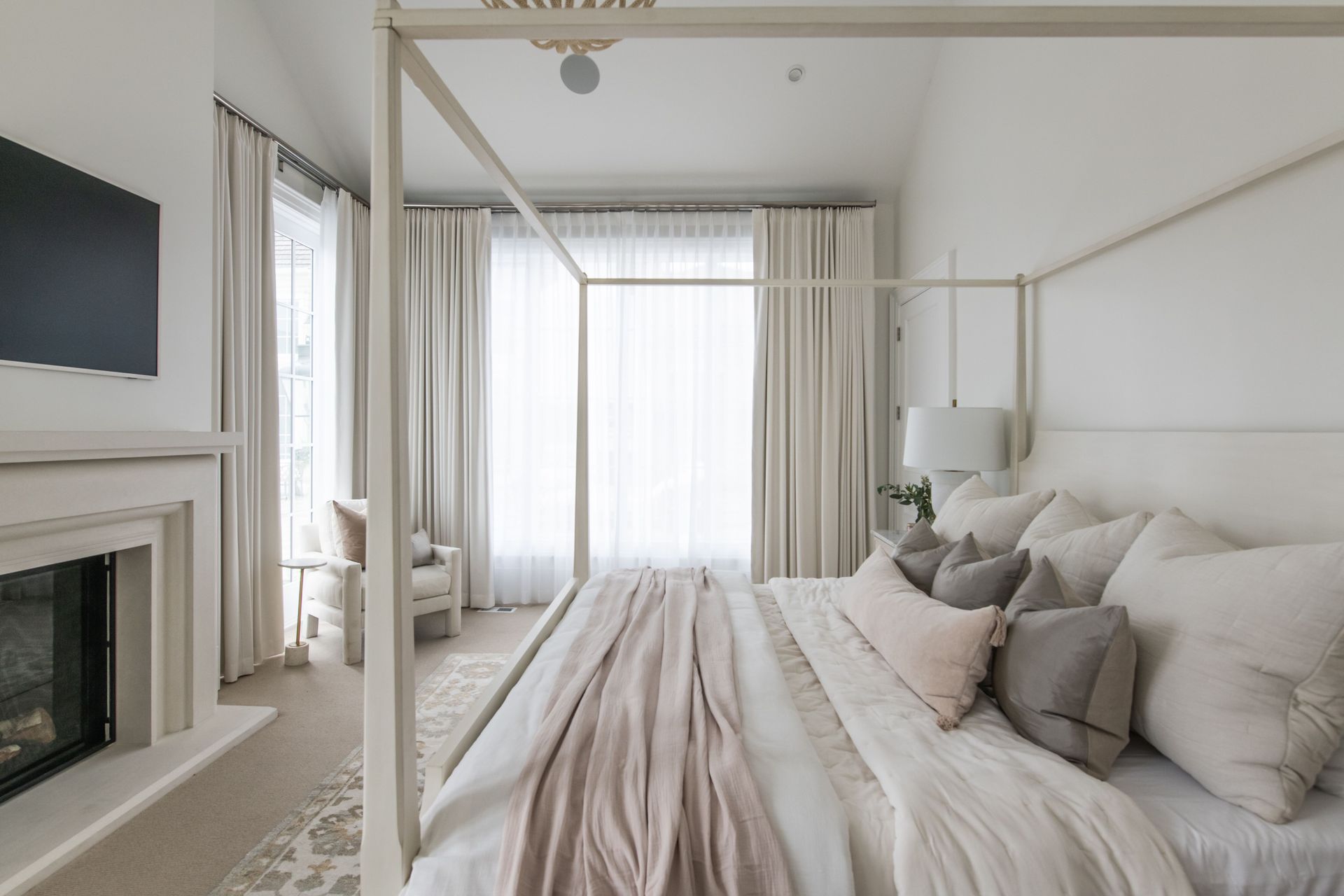
Drapery is often used to add softness, scale, and presence to a space. In rooms where architecture or furnishings feel structured, drapery brings balance.
Designers typically lean toward drapery in:
- Primary bedrooms — for a layered, calming feel
- Living rooms — to add height and visual interest
- Dining rooms — where a more formal, finished look is desired
Beyond aesthetics, drapery also plays a functional role. It can enhance light control when layered with shades and help with acoustics in larger spaces.
But most importantly, it creates a sense of completeness. A room with drapery often feels more finished, more intentional.
When Shades Are the Better Choice
Shades are about precision and simplicity.
They’re often the preferred solution when:
- Clean lines are a priority
- Window placement is a focal point
- Function needs to be seamless and unobtrusive
Designers often recommend shades in:
- Kitchens and bathrooms — where durability and simplicity matter
- Modern or minimalist homes — where visual clutter is minimized
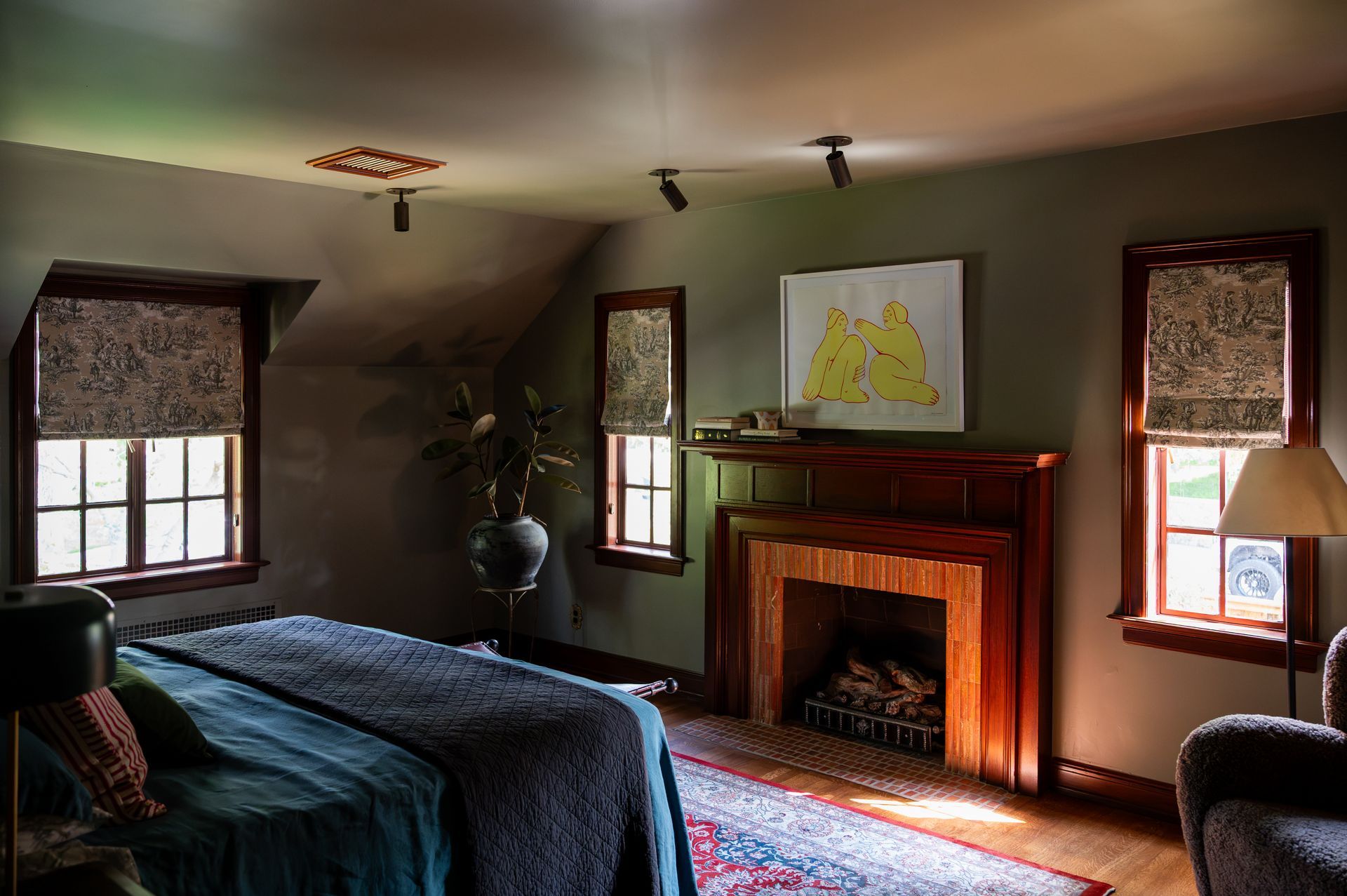
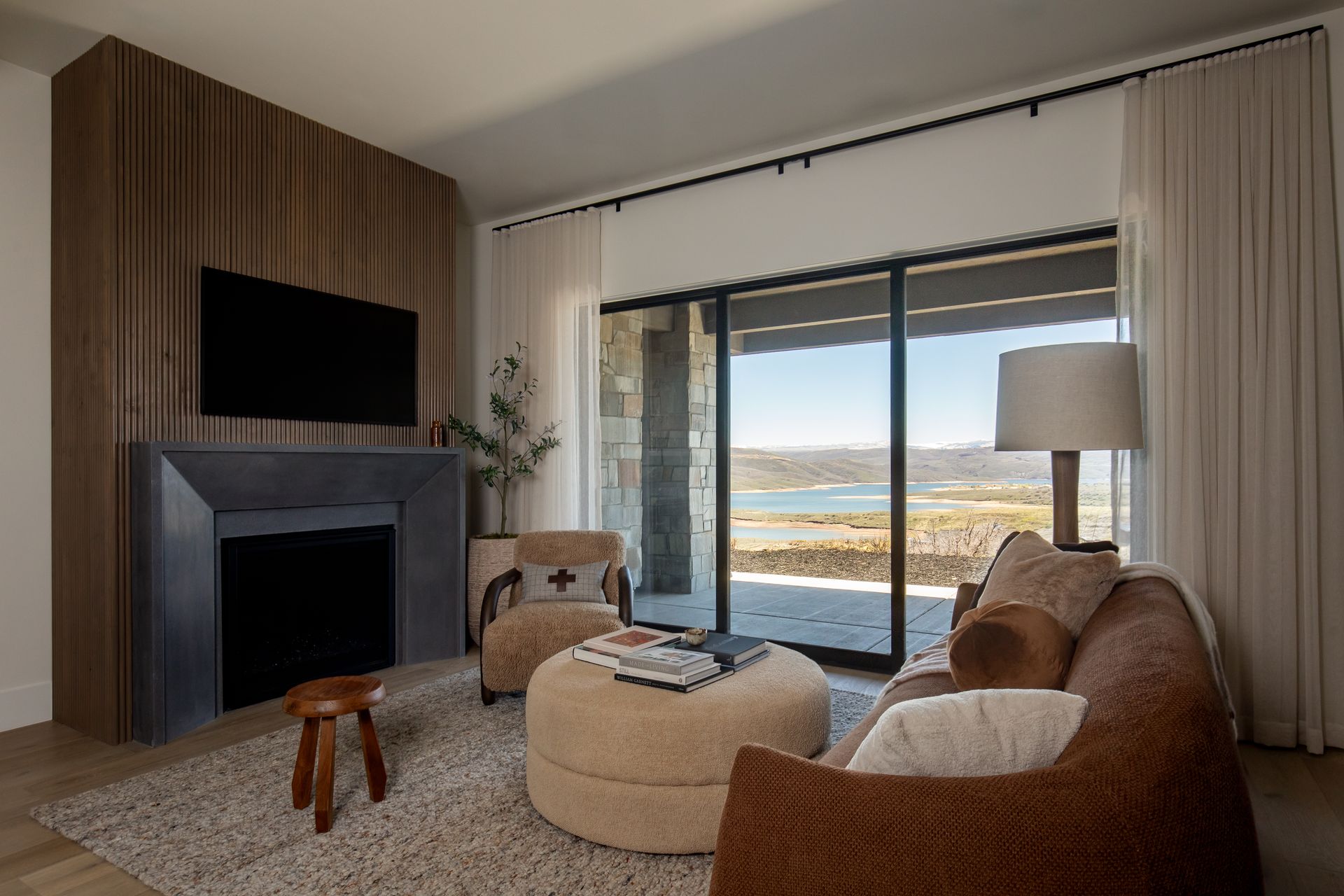
- Rooms with beautiful views — where the window itself should remain the focus
Motorized shades, in particular, are becoming standard in custom homes, allowing for effortless control and a more integrated experience.
The Power of Layering
In many high-end homes, the answer isn’t one or the other—it’s both.
Layering drapery with shades allows designers to balance:
- Light control + softness
- Privacy + openness
- Function + aesthetic
A common approach is pairing:
- A sheer shade or light-filtering shade for daytime use
- With custom drapery panels to frame the space and elevate the design
This combination creates flexibility throughout the day while maintaining a cohesive, elevated look.
Privacy vs. Aesthetics
One of the biggest considerations in window treatments is how to balance privacy with design.
- Shades offer controlled, adjustable privacy
- Drapery softens the space and enhances the visual experience
In more exposed homes—or those with large expanses of glass—designers often use both to ensure privacy without compromising the design intent.
What Designers Are Seeing Right Now
Across high-end homes, a few trends are consistent:
- Integrated, motorized solutions planned early in the build
- Recessed tracks and pockets for a seamless, built-in look
- Neutral, textural fabrics that add depth without overwhelming the space
- Layered treatments that prioritize both beauty and function
The shift is clear: window treatments are no longer an afterthought—they’re part of the architecture.
The Bottom Line
The right choice between drapery and shades depends on the space, the architecture, and how the home is meant to be experienced.
At Park City Blind & Design, everything we do is custom—designed to complement the home, not compete with it.
Because in the end, it’s not just about covering a window—it’s about creating a space that feels intentionally finished.