Privacy Without Losing the View: A Guide to Sheer, Light-Filtering, and Dual Shades
Almost every consultation we do eventually comes down to the same tension: the homeowner loves their view, but doesn't want to feel like they're on display to get it. It comes up in a mountain home with neighbors close enough to see into the living room. It comes up in a desert home with a street-facing front window. It comes up in a condo with a shared courtyard. The window that gave you the view in the first place is the same window giving everyone else a view of you.
The good news is that privacy and view aren't actually opposites — they just require the right product, not just any shade pulled all the way down.
Why "Just Close the Blinds" Isn't the Answer
The easy fix is also the one that defeats the purpose. Lower a standard blackout or room-darkening shade and you get privacy, but you also lose the view, the natural light, and the reason you liked the room in the first place. If that's happening in a room you actually spend time in, it's usually a sign the window has the wrong product on it, not that privacy and view are impossible to have together.
Sheer Shades: Privacy During the Day, Softness Always
Sheer horizontal shades — vanes suspended between two sheer fabric panels — are one of the most effective solutions for daytime privacy. During the day, they diffuse incoming light and obscure the interior from outside view while still letting you see out and enjoy natural light. At night, when interior lighting is on, the dynamic reverses, so most homeowners pair sheers with a secondary treatment for evening hours.
Light-Filtering Fabrics: The Middle Ground
Not every room needs full blackout, and not every room can get away with sheer. Light-filtering fabrics sit in between — they soften and diffuse light rather than blocking it, and depending on the weave and color, they can significantly reduce visibility from outside during the day while keeping the room bright. This is often the right call for home offices, kitchens, and living rooms where you want the room usable and comfortable without feeling exposed.
Dual Shades: Two Fabrics, One Headrail
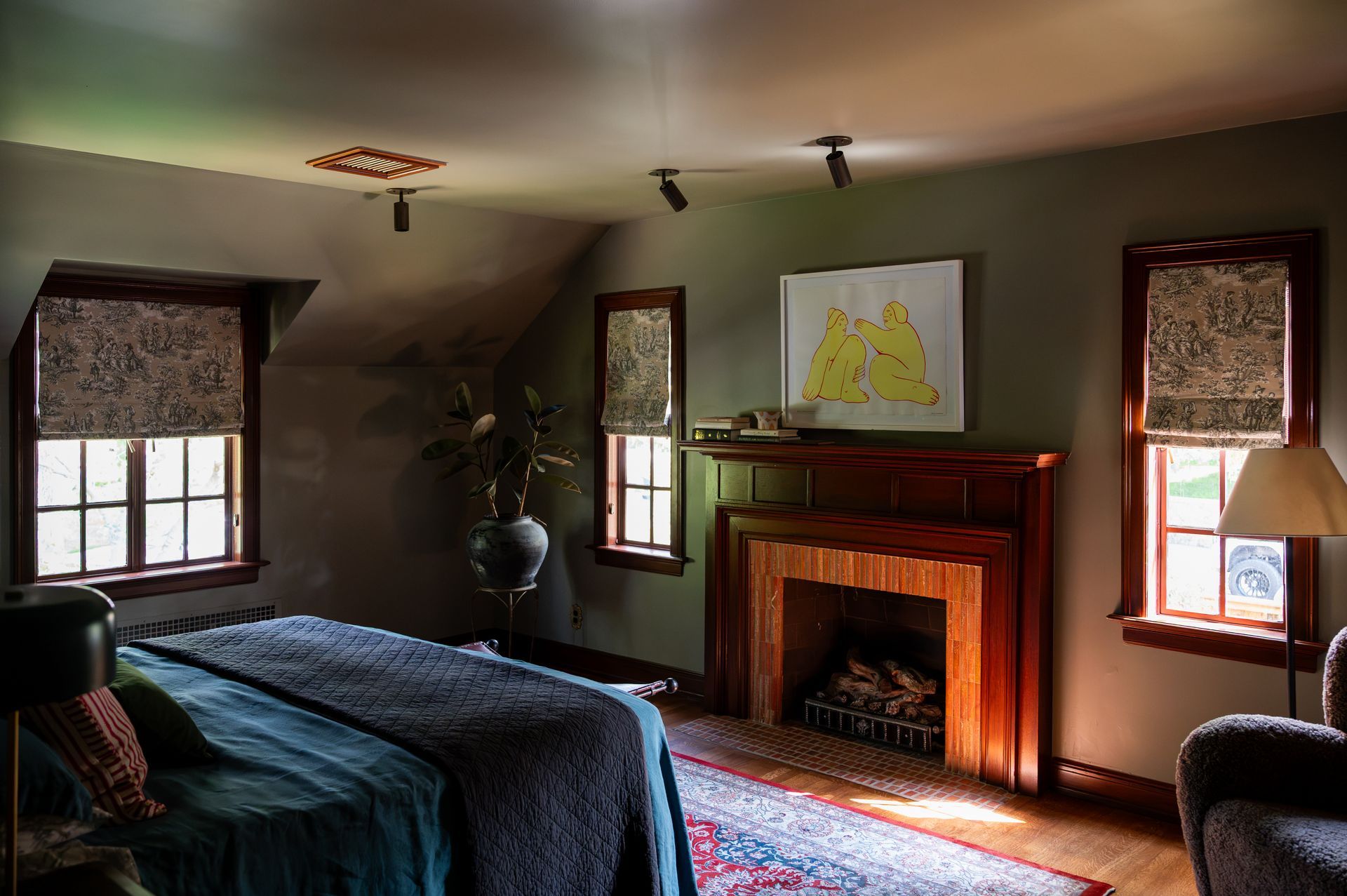
Dual (or "day/night") shades combine a sheer or light-filtering fabric with a room-darkening or blackout fabric in a single shade. You switch between them depending on the time of day or the level of privacy you need, without swapping treatments or adding a second layer to the window. It's a practical solution for rooms that genuinely need to do double duty — a bedroom that also functions as a home office, or a living room that faces a busy street.
Top-Down/Bottom-Up: Privacy at Eye Level, Light Above It
For windows where the privacy concern is really about eye-level sightlines — a street-facing window, a ground-floor room, a window facing a neighbor's patio — top-down/bottom-up shades let you cover just the lower portion of the window while leaving the top open. You get privacy where it matters and light where it doesn't, without covering the whole window.
Layering: Sheers Plus Drapery
For rooms where you want both daytime privacy and an evening-appropriate finished look, layering a sheer shade with drapery gives you the most flexibility. The sheer handles daytime privacy and light diffusion; the drapery closes for full privacy and adds warmth and texture to the room once the sun is down. It's a more built-out solution, but it's also the one that tends to look the most intentional — like the window was designed, not just covered.
Where This Comes Up Most in Our Two Markets
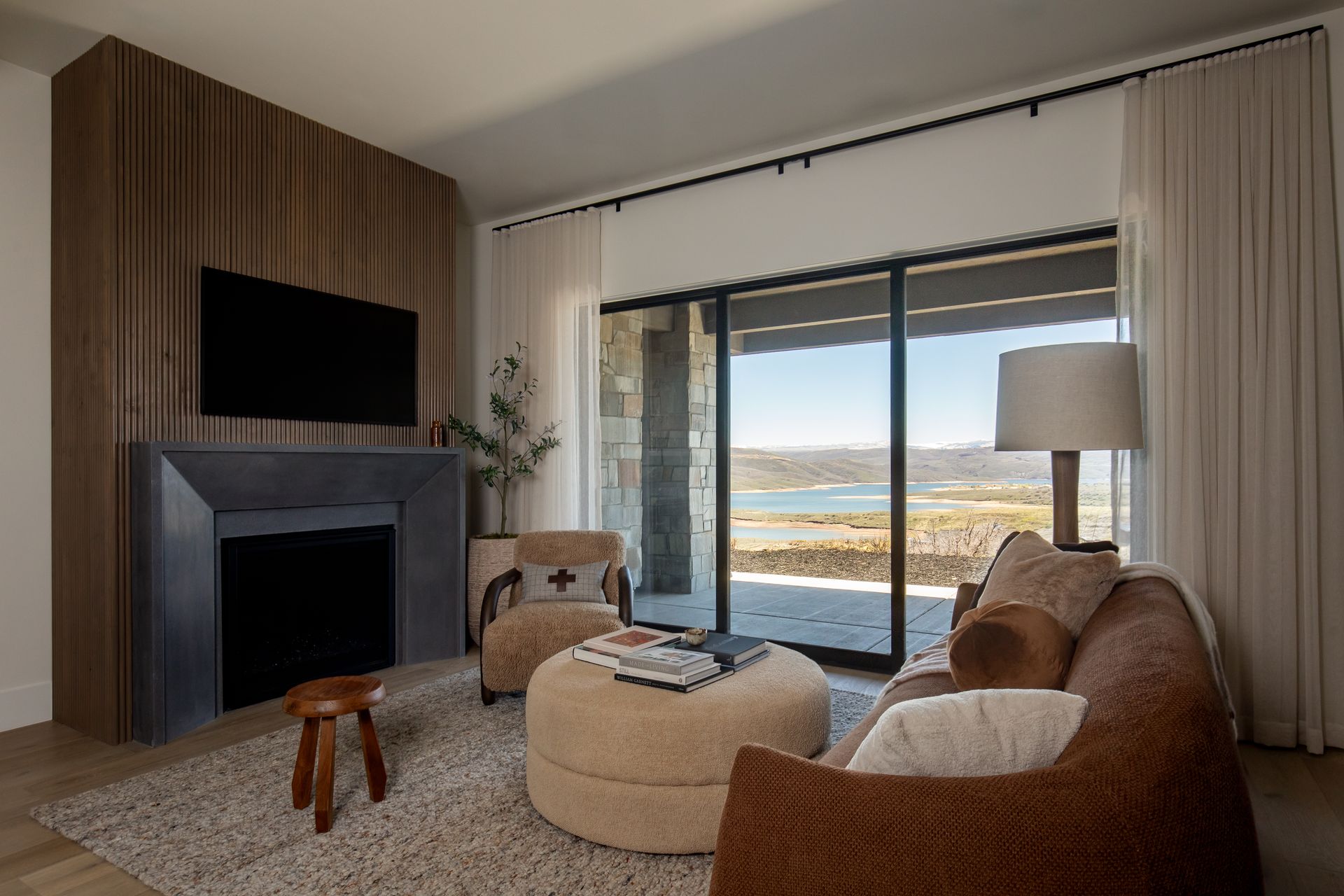
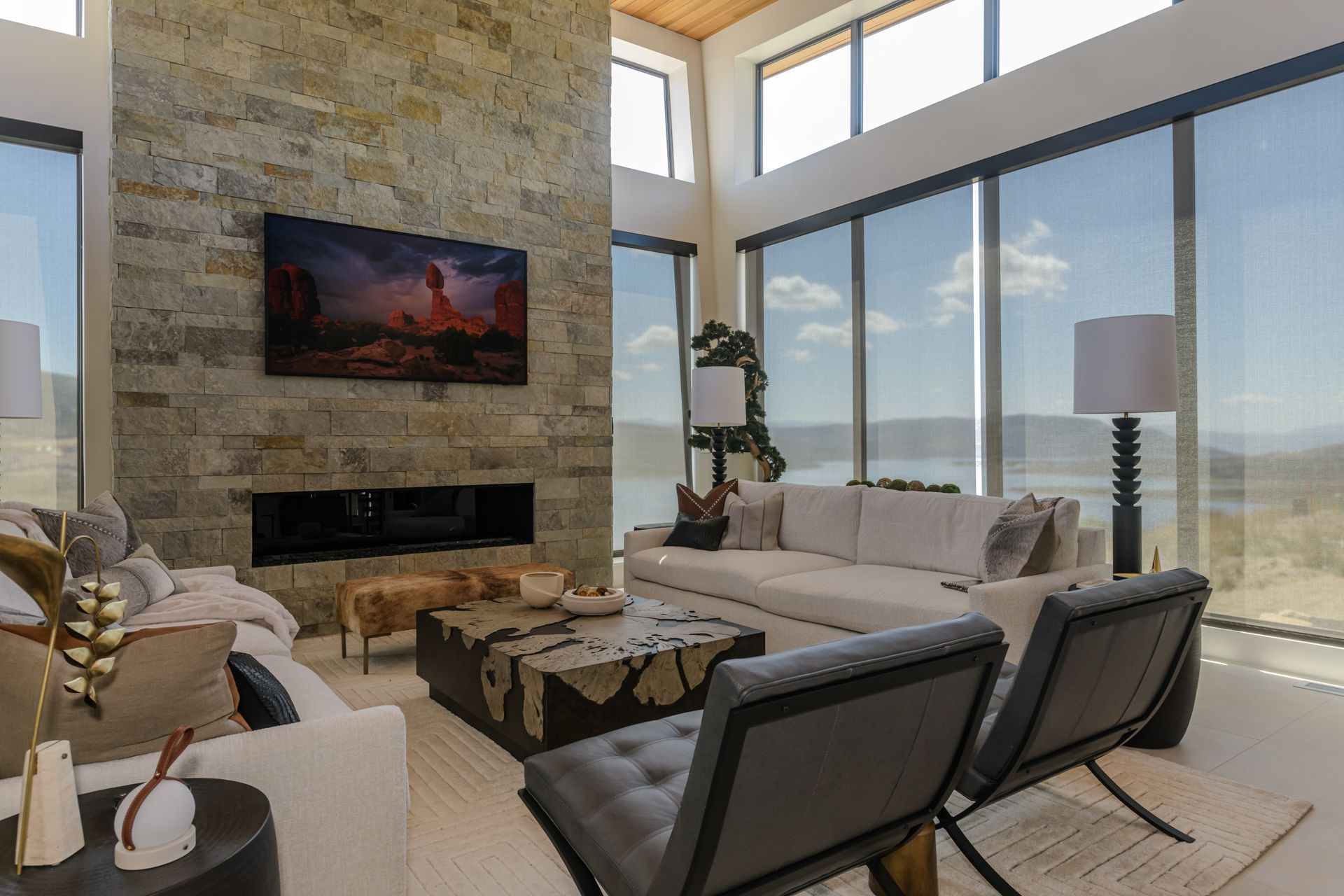
- Park City, the Wasatch Back, and Northern Utah: Mountain homes are often built with the view as the centerpiece — floor-to-ceiling glass facing the ski runs, the canyon, or a neighboring property that's closer than the architecture plans made it feel. Sheers and light-filtering shades let homeowners keep that view as the focal point of the room while still feeling comfortable using the space during the day.
- St. George and Southern Utah: Desert homes tend to have more street-facing glass and closer lot lines than mountain properties, and the view worth keeping is usually the red rock or a backyard pool rather than a ski slope. The same tools apply — light-filtering fabrics and top-down/bottom-up shades are especially useful for front-facing rooms that see foot and street traffic during the day.
Neither market's need is really about weather here — it's about how the home is oriented and who can see in. That's true whether it's July or January in either location.
Motorization Makes This Easier to Actually Use
A lot of dual-shade and layered setups sound great in theory but go unused in practice simply because operating two treatments by hand is more friction than most people want on a daily basis. Motorizing the privacy layer — scheduled to lower at dusk, or controlled with a single button alongside drapery — is what makes a layered solution actually get used instead of left in one position permanently.
Getting the Right Fit for Your Windows
The right answer depends on the window's orientation, how close neighbors or the street really are, what time of day the room gets used most, and how much you're willing to layer. That's not something to guess at from a fabric swatch — it's the kind of thing worth walking through room by room.
Have a room where you're choosing between privacy and the view you paid for? Schedule a complimentary consultation with our design team in Park City or St. George, and we'll help you find the fabric and setup that gives you both.