The Role of Window Treatments in Energy Efficiency
Did you know that the right window treatments can significantly reduce your energy bills? Windows are one of the primary sources of heat loss in winter and heat gain in summer, making energy-efficient window treatments an essential component in maintaining a comfortable and cost-effective home. Here’s how insulated blinds, thermal shades, and other smart window treatments can improve energy efficiency.
1. How Window Treatments Improve Insulation
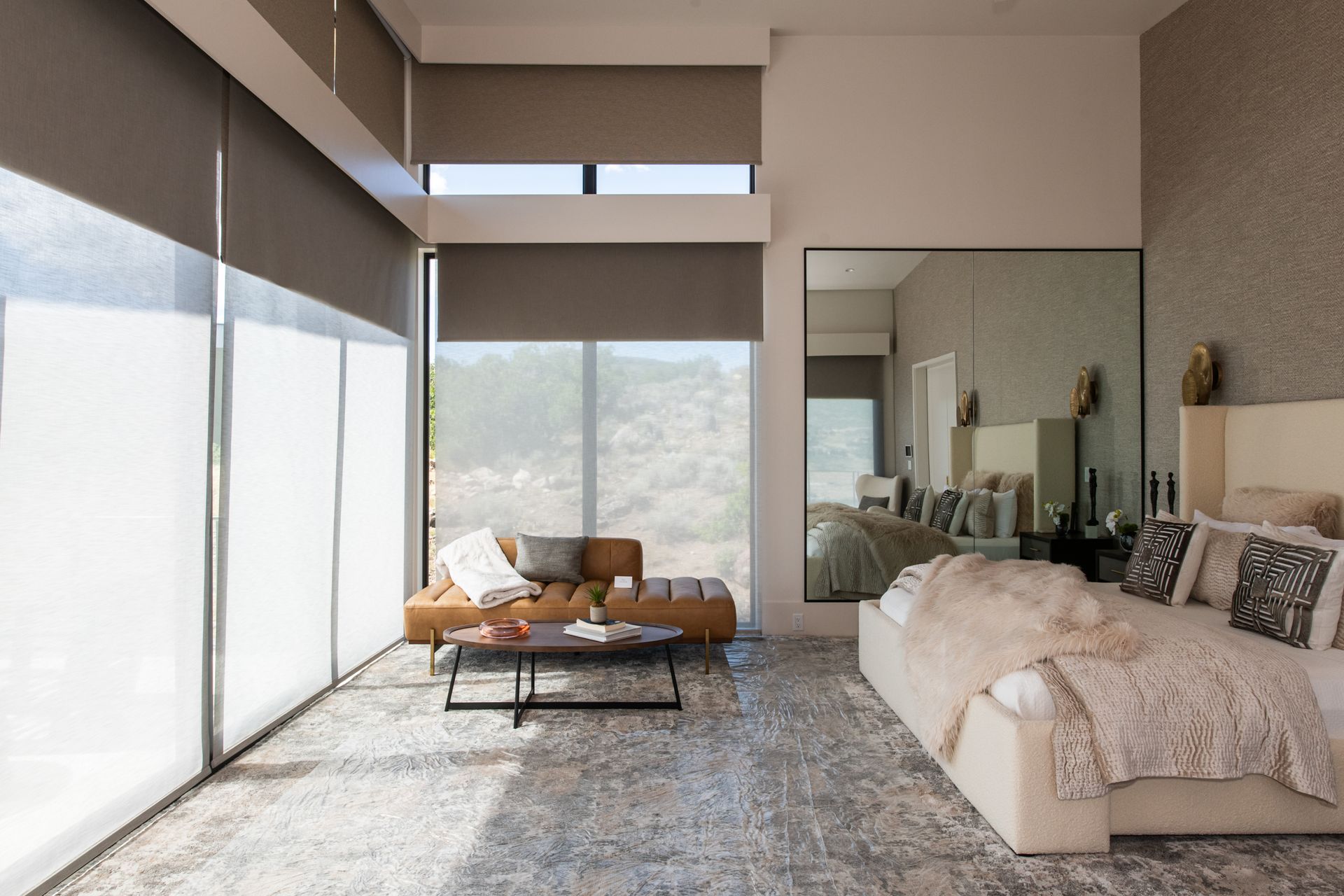
Window treatments serve as an additional barrier between indoor spaces and outdoor temperatures. They help trap heat inside during colder months and keep interiors cool in the summer, reducing the need for excessive heating and cooling.
- Thermal Shades: These specially designed shades feature insulating materials that minimize heat transfer.
- Insulated Blinds: Cellular or honeycomb blinds are excellent at trapping air within their structured layers, adding an extra layer of insulation.
- Heavy Drapes & Curtains: Thick fabric drapes can block drafts and retain warmth during winter.
2. Reducing Energy Costs Year-Round
By strategically selecting and using window treatments, homeowners can cut down on energy expenses throughout the year:
- Winter: Keep thermal shades or cellular blinds closed at night to prevent heat loss.
- Summer: Use reflective or solar shades to block harsh sunlight and reduce cooling needs.
- All Seasons: Automated or motorized treatments can be programmed to adjust based on time of day and sunlight exposure for optimal energy savings.
3. Maximizing Natural Light & Ventilation
Properly managed window treatments allow for better control of natural light and airflow, reducing the need for artificial lighting and air conditioning.
- Sheer Curtains & Solar Shades: Let in natural light while filtering out harmful UV rays.
- Adjustable Blinds & Shades: Open them during cooler parts of the day to improve airflow and minimize HVAC usage.
4. Smart & Motorized Window Treatments
Modern technology has brought motorized window treatments that can be scheduled or controlled remotely to optimize energy efficiency. Features such as light sensors and timers ensure your shades adjust automatically to maintain a comfortable indoor temperature.
5. Selecting the Right Energy-Efficient Window Treatments
When choosing window treatments for insulation and energy savings, consider:
- Material: Look for multi-layered fabrics, reflective coatings, or cellular structures.
- Color: Lighter shades reflect heat, while darker ones absorb warmth.
- Functionality: Opt for motorized options for seamless energy management.
____________________________________________________
Investing in energy-efficient window treatments can lead to long-term savings while making your home more comfortable and eco-friendly. Whether it’s thermal shades, insulated blinds, or motorized solutions, the right choice can significantly enhance your home’s insulation and reduce energy costs.
At Park City Blind and Design, we specialize in custom energy-saving window treatments tailored to your needs. Contact us today to learn how we can help enhance your home’s efficiency!