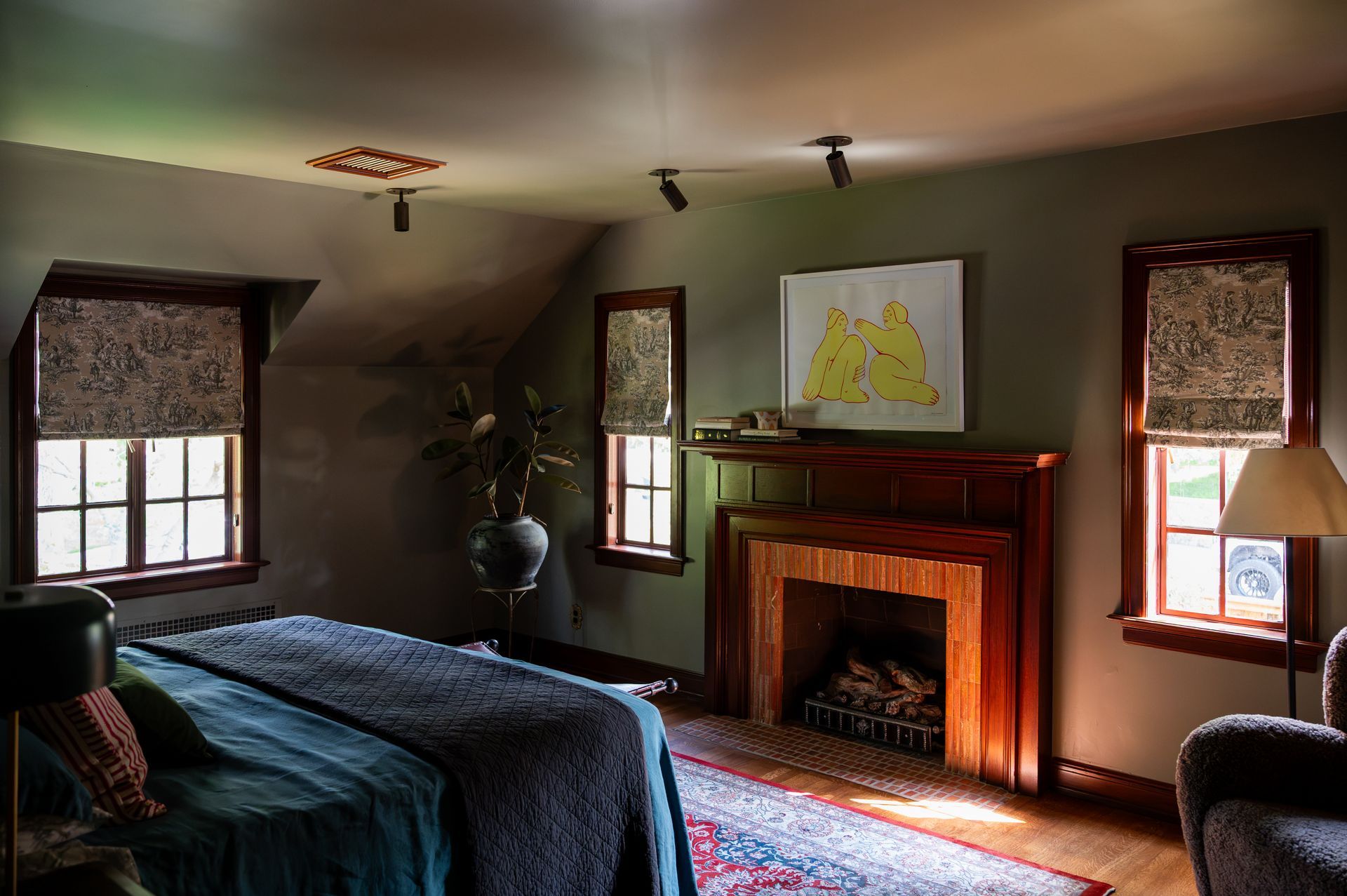
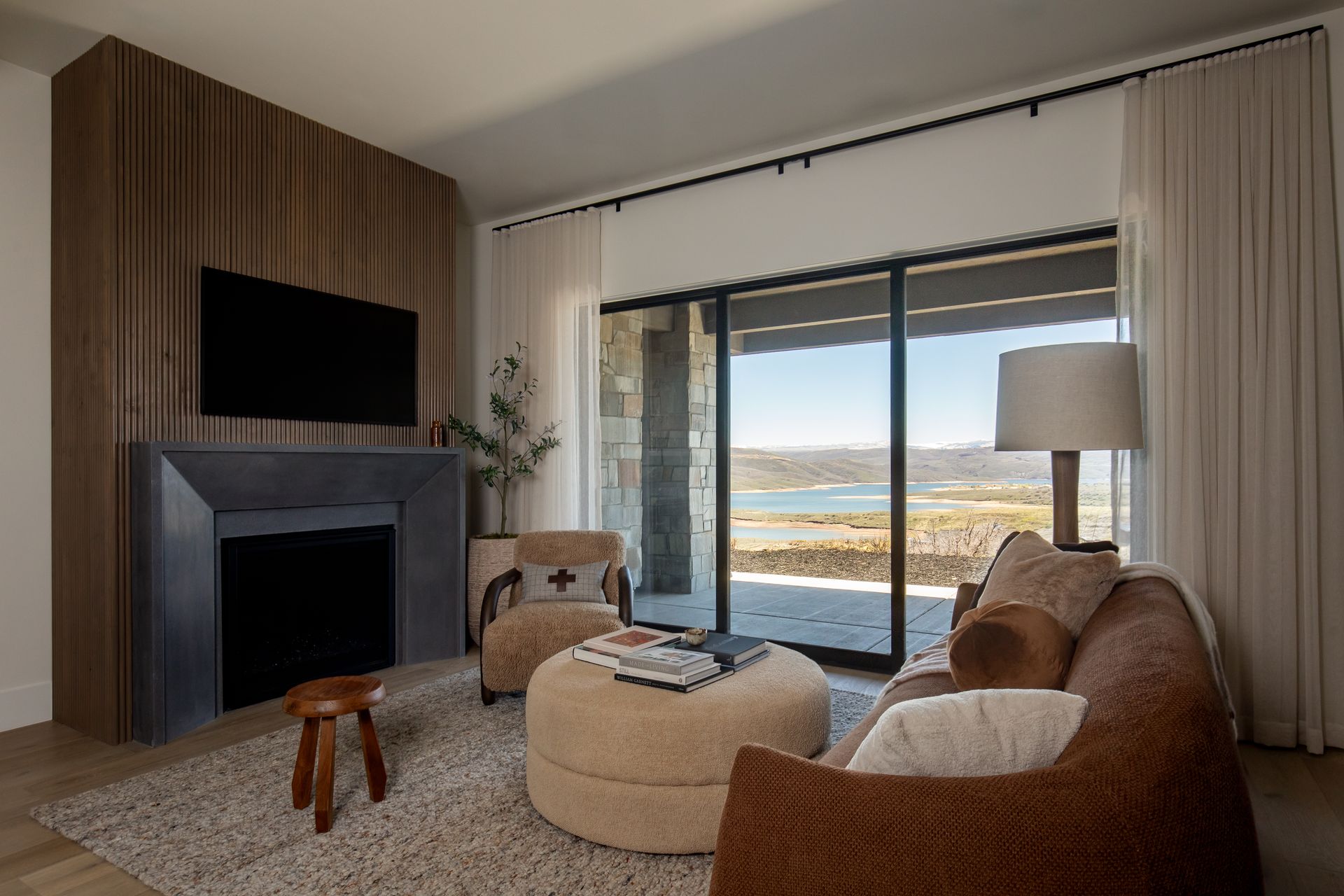
A Designer’s Guide to Living Room Window Treatments
Living rooms are where a home is most experienced—morning light, evening gatherings, and everything in between. While furniture and finishes set the tone, window treatments are often what bring the entire space into balance.
In well-designed homes, they’re not treated as an afterthought. They’re considered early, designed intentionally, and executed with precision—because how a space feels day to day is often shaped by how light is managed, softened, and framed.
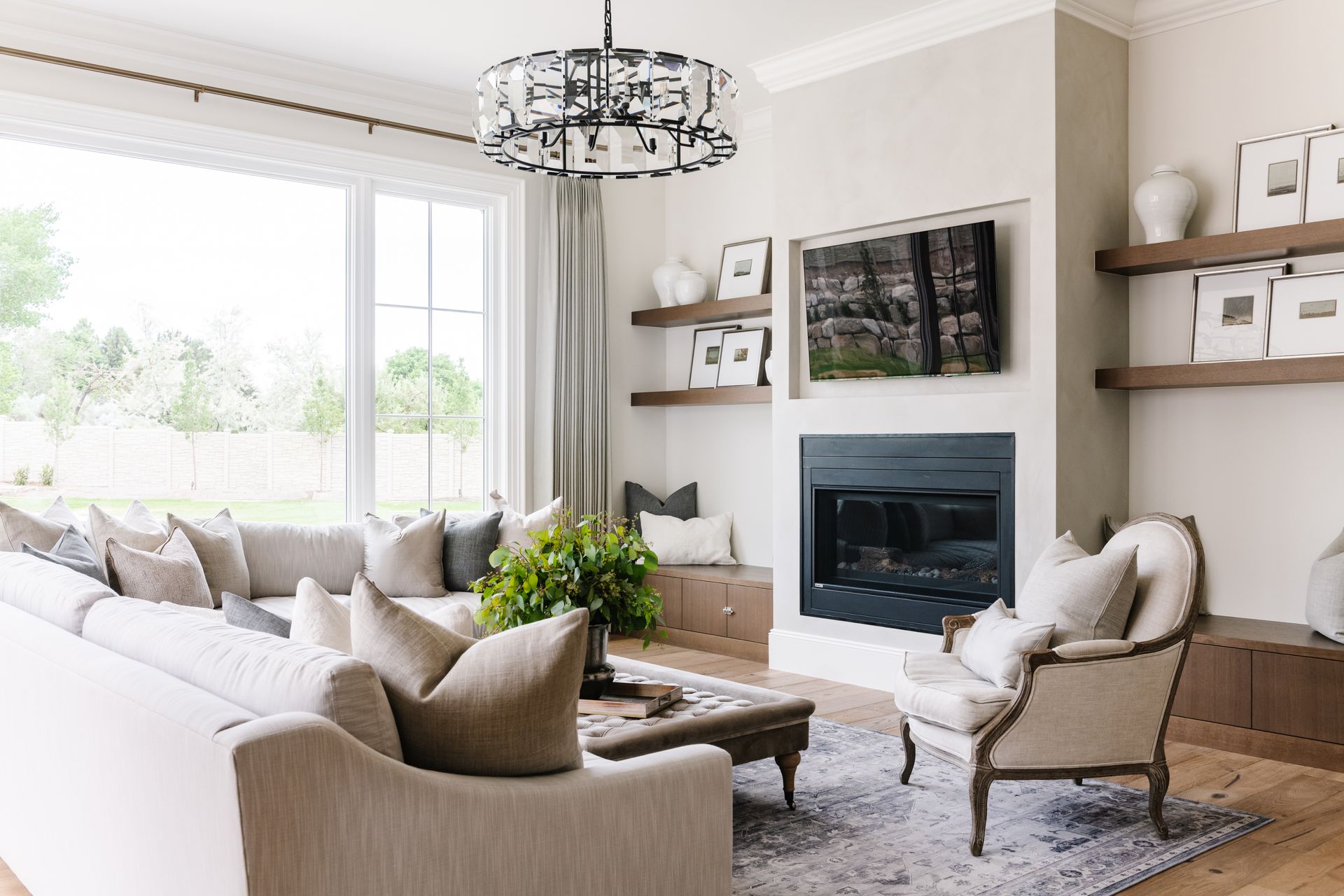
Start with the Space
Before selecting materials or systems, the first step is understanding how the living room is used.
Is it designed for entertaining, or everyday living? Does the space open to large views, or require more privacy? How does natural light move through the room throughout the day?
Living rooms with expansive windows often benefit from layered solutions, while smaller or more intimate spaces may call for simplicity and restraint.
These early considerations guide the right combination of custom living room window treatments, ensuring the space feels both functional and cohesive.
Light Control Is Everything
In a living room, light control is less about blocking light—and more about refining it.
Unfiltered sunlight can create glare, wash out finishes, and make a space feel harsh. The right window treatments soften and diffuse light, creating a more comfortable and balanced environment.
- Sheer shades filter daylight while maintaining the view
- Drapery panels add softness and help control brightness
- Layered systems allow flexibility from morning to night
In many homes, this balance is achieved by combining solutions—such as pairing Hunter Douglas shades with custom drapery—allowing the space to adapt naturally throughout the day.
Choosing the Right Window Treatments for a Living Room
The right window treatments should feel integrated—not applied.
Rather than selecting based on trend, the goal is to choose a solution that complements the architecture, materials, and scale of the space.
- Custom drapery introduces softness, movement, and a more elevated finish
- Roller or Roman shades offer a clean, tailored look with precise light control
- Layering drapery and shades creates depth, flexibility, and a more complete design
For living rooms in Park City and surrounding areas, where views are often a focal point, window treatments are typically designed to enhance—not compete with—the landscape.
Scale, Height, and Proportion
In living rooms—especially those with tall ceilings or large windows—proportion plays a critical role.
Floor-to-ceiling drapery can visually expand the height of a space, while proper fullness ensures panels feel substantial rather than minimal. Mounting hardware higher and wider than the window frame can also make windows appear larger and more intentional.
These details are often subtle, but they’re what distinguish a finished space from one that feels incomplete.
Motorized Window Treatments for Modern Living
Motorization has become a standard in many luxury homes, particularly in living rooms with larger or hard-to-reach windows.
Systems like Lutron motorized shades allow for seamless control of light and privacy—whether adjusting throughout the day or setting automated schedules.
Beyond convenience, motorized window treatments:
- Protect interiors from prolonged sun exposure
- Maintain consistent light levels throughout the space
- Eliminate the need for constant manual adjustment
It’s a functional detail that enhances how a living room performs day to day—without adding visual clutter.
Layering for a More Complete Design
One of the most effective ways to elevate a living room is through layering.
Rather than relying on a single solution, combining shades and drapery creates flexibility and depth.
For example:
- Shades can provide everyday light control and privacy
- Drapery can frame the space and soften the overall look
- Together, they allow the room to transition seamlessly from day to evening
Layering also adds a sense of completeness—making the design feel intentional from every angle.
Why Planning Window Treatments Early Matters
The most seamless results happen when window treatments are considered early in the design process.
Planning ahead allows for:
- Recessed or hidden shade pockets
- Integrated motorization and wiring
- Alignment with trim, millwork, and architecture
When these elements are coordinated from the beginning, window treatments feel like part of the home—not something added later.
A Final Thought
The best living room window treatments don’t draw attention to themselves—they support the space.
They refine the light, complement the architecture, and create a room that feels calm, intentional, and complete.
When done well, they’re not just functional—they’re foundational to how the space is experienced every day.