Let's Talk About Lutron vs. Hunter Douglas Motorization
What’s the Difference—and Which Is Right for Your Home?
Motorized window treatments are no longer a luxury add-on—they’re quickly becoming a standard in well-designed homes. From controlling natural light to improving energy efficiency and privacy, the right system makes a noticeable difference in how a space functions and feels.
Two of the most recognized names in the industry are Lutron and Hunter Douglas. While both offer high-quality motorization, they approach it differently.
Here’s a clear breakdown to help you understand which might be the better fit for your project.
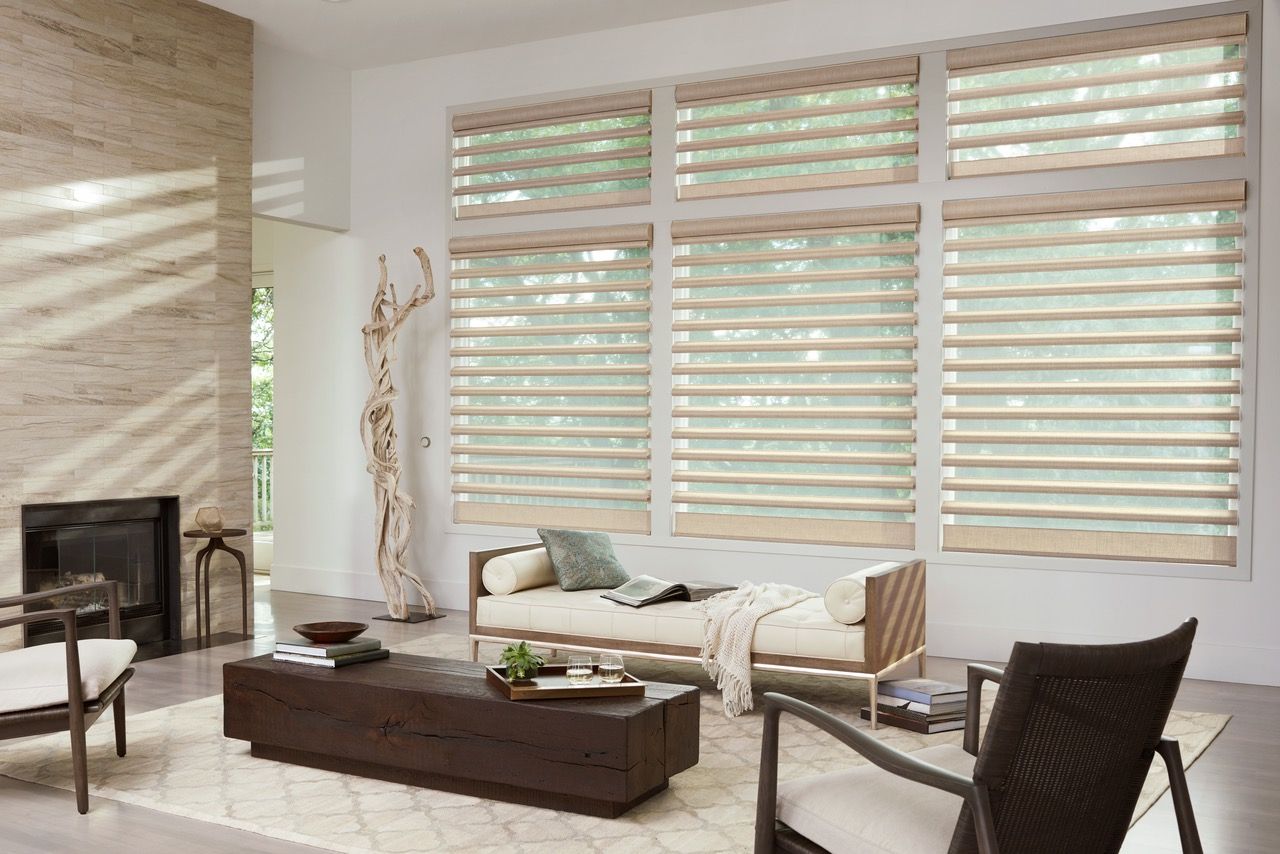
Why Motorization Matters
Before comparing brands, it’s worth understanding what motorization actually solves:
- Consistent light control throughout the day
- Increased privacy without manual adjustment
- Integration with smart home systems
- Protection for fabrics and interiors from UV exposure
- Clean, cord-free operation
In custom homes especially, motorization is often planned early—because it works best when it’s integrated, not added later.
Lutron Motorization
Best known for: precision, reliability, and full-home integration
Lutron is widely recognized as a leader in lighting control, and their shading systems are built with that same engineering-first mindset.
Key strengths:
- Ultra-quiet performance
Lutron motors are known for being among the quietest available, which is especially important in bedrooms and large open spaces. - Advanced automation
Their systems are designed to integrate seamlessly with whole-home automation platforms, including lighting, climate, and AV systems. - Wired and wireless options
Lutron offers both hardwired (ideal for new construction) and wireless systems (better for retrofits). - Precise control
Shades can be programmed to adjust at specific times of day, often tied to sunrise/sunset or occupancy.
Considerations:
- Typically requires more planning during the build process
- Often a higher upfront investment
- Best suited for fully integrated smart homes
Hunter Douglas Motorization
Best known for: design flexibility and user-friendly control
Hunter Douglas focuses heavily on the design side of window treatments, offering a wide range of styles paired with motorization.
Key strengths:
- Wide product selection
From shades to blinds to specialty designs, Hunter Douglas offers more variety in materials, textures, and styles. - PowerView® Automation
Their proprietary system allows users to control shades via app, remote, or voice assistants like Alexa, Google Assistant, and Apple HomeKit. - Battery-powered convenience
Many systems are battery-operated, making them easier to install without wiring. - Strong design integration
Ideal for projects where aesthetics and fabric selection are the primary focus.
Considerations:
- Motors may be slightly more audible compared to Lutron
- Less robust for whole-home automation systems compared to Lutron’s ecosystem
- Battery maintenance required over time
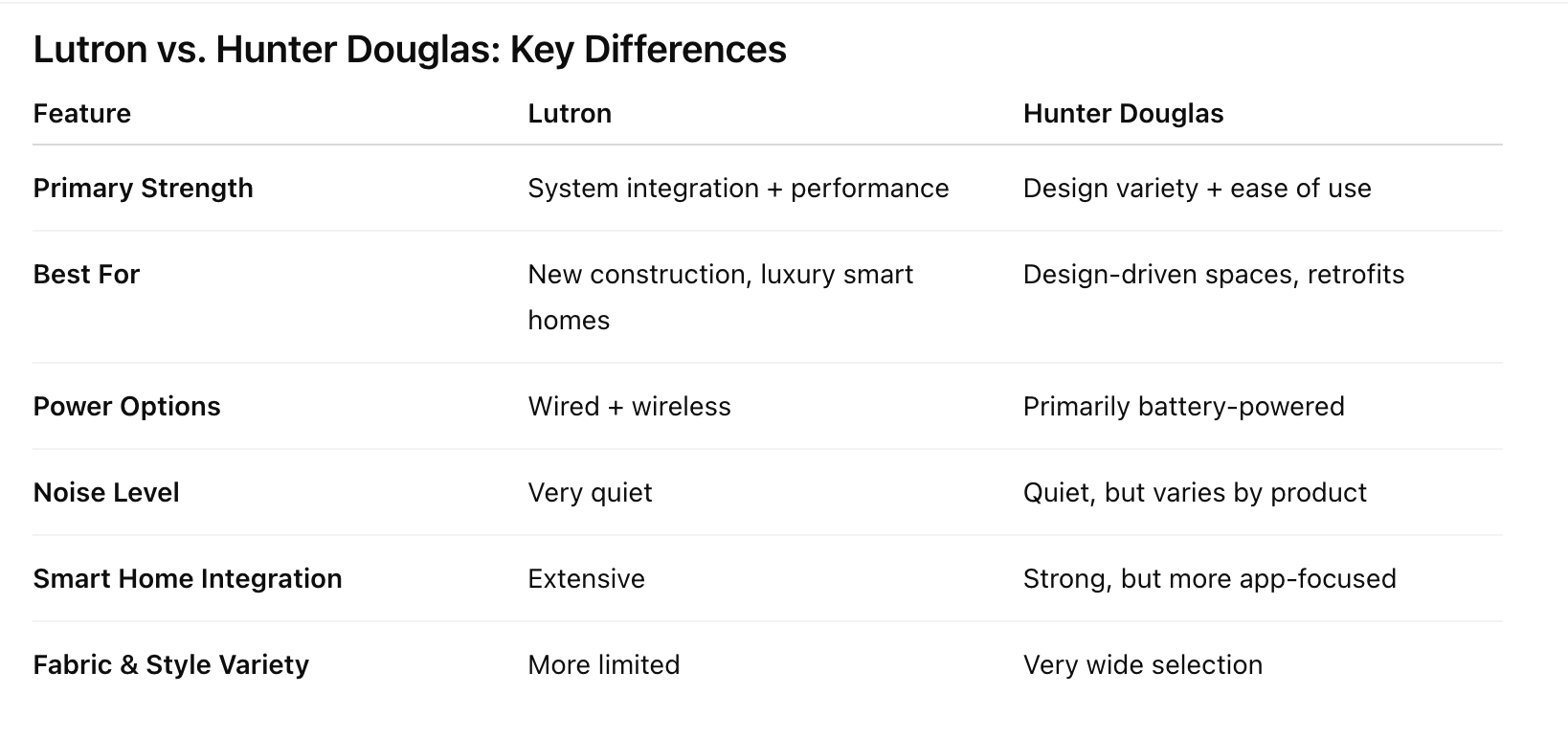
Which One Is Right for You?
It ultimately comes down to how the home is being used—and how early motorization is being considered.
- If your project is fully custom, highly automated, and planned early, Lutron is often the better fit.
- If your focus is design flexibility, fabric selection, and easier installation, Hunter Douglas is a strong option.
In many homes, it’s not even about choosing one over the other—it’s about selecting the right system for each space.
Our Approach at PCB
At Park City Blind & Design, motorization is never a one-size-fits-all decision.
We work closely with builders, designers, and homeowners to:
- Understand how each space is used
- Evaluate light exposure and privacy needs
- Coordinate with electrical and automation plans
- Select systems that feel integrated—not added on
Because when motorization is done right, you don’t think about it—you just live with it.
Both Lutron and Hunter Douglas offer high-quality motorization, but they serve slightly different priorities.
The best choice isn’t just about the product—it’s about how it fits into the overall design, function, and flow of the home.